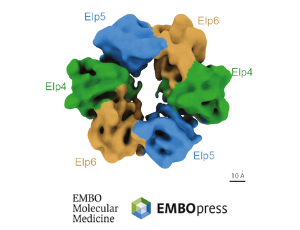
SOLARIS Centre users from the Malopolska Centre of Biotechnology (of the Jagiellonian University, together with Australian, Turkish and Canadian colleagues, have found a link between defects in the cellular protein production machinery and neurodevelopmental disorders (NDDs), characterized by an inability to reach cognitive and motor milestones. Key studies in this publication were conducted using Cryo-EM microscopes located at our center.
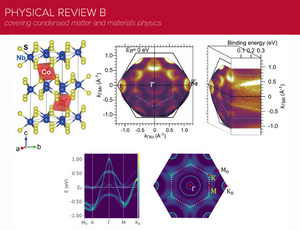
A team of scientists from Zagreb, Wien, Lausanne and Krakow led by Dr. Eduard Tutiš has investigated an antiferromagnetic layered compound Co1/3NbS2 - an example of the transition metal dichalcogenide (TMD), having complex magnetic structure.
Not so many compounds are as important to industry and medicine today as titanium dioxide (TiO2). The electronic structure of transition metal oxides is an important factor determining the chemical and optical properties of materials. Specifically for metal-oxide structures, the crystal-field interaction determines the shape and occupancy of electronic orbitals. Consequently, the crystal-field splitting and resulting unoccupied state populations can be foreseen as modeling factors of the photochemical activity. The research on titanium dioxide inaugurated the presence of IFJ PAN scientists in research programs carried out at the SOLARIS synchrotron. The measurements, co-financed by the National Science Center, were carried out at the XAS beamline.
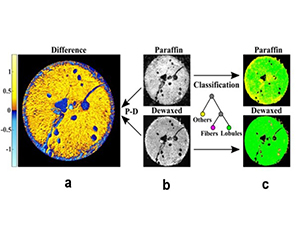
The FT-IR spectroscopic imaging in combination with machine learning algorithms has a great potential as a support for histopathologists in distinguishing types of tissues and cancer diagnosis. The introduction of the method to clinical practice is limited by the relatively high cost of sample substrates and the long preparation and measurement time. Depending on the selected measurement mode (radiation transmission or transflection), two types of sample carriers are particularly applicable.