
Contact
Media contact
Agnieszka Cudek
phone: +48 12 664 41 35
mobile phone: +48 795 545 750
e-mail: agnieszka.cudek@uj.edu.pl
Media contact
Agnieszka Cudek
phone: +48 12 664 41 35
mobile phone: +48 795 545 750
e-mail: agnieszka.cudek@uj.edu.pl
Academic visits
SOLARIS User Office
phone: 12 664 41 85, 12 664 41 99
email: user.solaris@uj.edu.pl
School visits
MSc. Natalia Zapart
phone: +48 12 664 41 38; +48 453 689 818
e-mail: zwiedzanie.solaris@uj.edu.pl
A synchrotron is a cyclic accelerator, i.e. a device in which particles are accelerated and travel around a fixed closed-loop path (in contrast to linear accelerators in which accelerated particles move in a straight line). In the SOLARIS synchrotron, electrons are accelerated. When the path of electrons rushing at a speed close to the speed of light is curved (so that they move in a circle), electromagnetic radiation, called synchrotron light, is produced. This light is taken out of the synchrotron through to the so-called beamlines. At the end of the beamlines, experimental end-stations are mounted.
Thus, a synchrotron is a device that produces light. The light allows research in many natural and technical sciences, such as biology, chemistry, physics, material engineering, nanotechnology, medicine, pharmacology, geology and crystallography.
Synchrotrons are unique devices because they produce extraordinary synchrotron light (synchrotron radiation). The unique properties of this type of light include its enormous intensity; it is millions of times brighter than the light that comes to Earth from the Sun. In addition, synchrotron radiation contains electromagnetic waves from the infrared spectrum, through visible and ultraviolet light up to the X-rays. Thanks to this, scientists can study various materials in many ways, both externally and internally. In this way, they learn how these materials are built, and what their chemical composition and electrical or magnetic properties are.
Many types of measurements are possible only when synchrotron light is used. This light also allows scientists to get better quality information in less time than by using traditional light sources. Because synchrotrons offer such vast opportunities, they are used in many branches of science such as biology, chemistry, physics, material engineering, nanotechnology, medicine, pharmacology, geology, and crystallography.
It should also be noted that synchrotrons are extremely efficient, they work 24 hours a day, seven days a week, providing radiation for scientists conducting measurements simultaneously at many experimental end-stations. They are real research factories.Both cyclotrons and synchrotrons accelerate charged particles (electrons, protons, ions). This kind of devices are called circular accelerators, because accelerating particle beam travels in them around a fixed closed-loop path. This is in opposition to linear accelerators in which accelerated particles move in a straight line.
In Kraków there is both a synchrotron and cyclotrons. The difference between them lies mainly in the type of accelerated particles. The SOLARIS synchrotron housed at the National Synchrotron Radiation Center (600th Anniversary Campus of the Jagiellonian University) accelerates electrons. Cyclotrons housed at the Bronowice Cyclotron Center (the Institute of Nuclear Physics of the Polish Academy of Sciences) accelerate mainly protons, but also light ions (such as deuterium or alpha particles). In the SOLARIS synchrotron, first electrons circulating in the storage ring produce electromagnetic radiation (synchrotron light), and then this radiation is used for research purposes. In the case of the cyclotrons, the accelerated particles themselves are used for research - scientists bombard samples with them. The cyclotrons are also used for medical purposes (cancer treatment: accelerated protons irradiate, and thus destroy, ocular tumors).
Synchrotron light allows materials and processes to be studied with extraordinary precision. It thus supports progress in medicine, energy, electronics, agriculture and environmental protection. Find out more about the research we conduct.
Designing new medicines and vaccines requires a precise understanding of the structure of molecules involved in disease development. For this purpose, scientists around the world use synchrotron research. It makes it possible to see the shape and atomic structure of proteins and other biomolecules with extraordinary, near-atomic precision. Synchrotron radiation allows researchers to determine how a drug or vaccine component binds to its target in the human body. Such studies have played an important role in the development of anticancer drugs, HIV therapies, efforts to combat neurodegenerative diseases, and vaccines based on viral proteins, including those against COVID-19. Synchrotron experiments also support the development of so-called smart drugs, which act precisely at the site of disease and reduce side effects. This research accelerates the development of more effective therapies, shortens diagnostic time, and increases patients’ chances of recovery.
Source: SOLARIS, SMAUG beamline, Cryo-EM.

Image source: licensed image library.

Microscopic visualization of the SARS‑CoV‑2 virus.
Image source: licensed image library.
According to World Health Organization (WHO) data, cancer is a global health challenge, with the number of cases continuing to rise. Pancreatic cancer is among the deadliest malignancies because it often develops for a long time without clear symptoms and is frequently detected only at an advanced stage. Fast and effective diagnostics are therefore crucial for patient prognosis. Scientists working at a synchrotron developed an innovative approach to analyzing pancreatic tissue that combines infrared imaging with machine-learning algorithms. The main goal was to develop a baseline model for future clinical applications in order to reduce the waiting time for diagnosis. Research using synchrotron infrastructure enables precise classification of cancerous and healthy tissue types. In the future, this may provide real support to physicians in making treatment decisions and contribute to the development of new methods in oncology.
Source: SOLARIS, CIRI beamline.

Image source: licensed image library.

Image of a tissue sample collected during surgery, shown along with magnified views highlighting key features: the boundary between healthy and cancer‑altered tissue with visible inflammation (B), a large area of dead tissue surrounded by cancer cells (C), and a region of healthy tissue displaying mild inflammation and blood infiltration (D).
Image source: doi:10.7150/ijbs.83068
With growing electricity consumption—especially in electromobility and renewable energy sources—demand for efficient and safe energy-storage systems is rapidly increasing. Developing next-generation batteries and accumulators requires a detailed understanding of the processes taking place inside them during charging and discharging. For this reason, scientists increasingly turn to synchrotron research. Synchrotron radiation makes it possible to observe structural and chemical changes in electrode materials in real time, at the atomic level. This enables studies of material degradation, ion migration, and the formation of defects responsible for capacity loss in batteries—so-called battery/accumulator ageing. Research conducted using synchrotron infrastructure supports the design of new electrode and electrolyte compositions that will allow the creation of batteries with higher capacity, longer lifetime, and improved safety.
Source: SOLARIS, PIRX beamline.
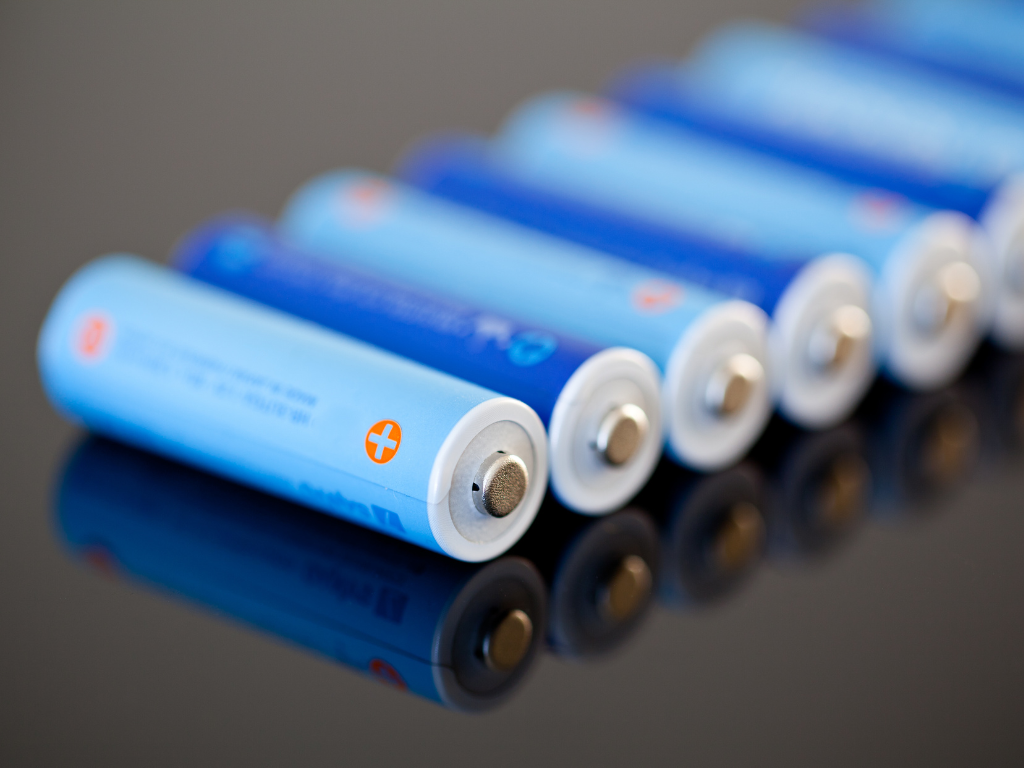
Image source: licensed image library.
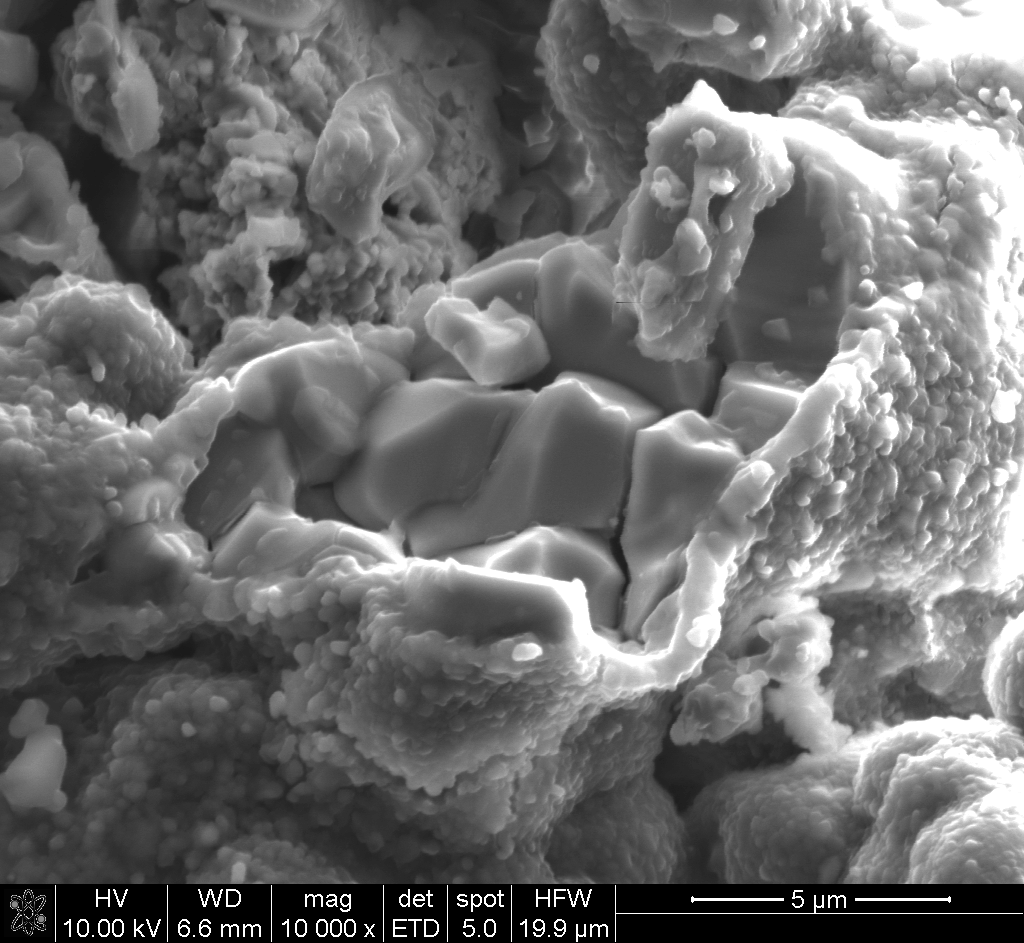
Electron microscope images show a material with two distinct structural scales: extremely tiny grains only a few nanometres in size, covered by larger particles. The material naturally tends to cluster into bigger groups, which can reach over 5 micrometres in size.
Image source: doi.org/10.1016/j.ensm.2022.02.038
The energy crisis—driven, among other factors, by rising fossil-fuel prices, dependence on imports, and political instability—highlights the key role of clean energy (renewable sources). This is why scientists are intensively searching for new ways to produce it. Producing hydrogen without carbon dioxide emissions is one of the key challenges of the energy transition. This element is considered a fuel of the future. In response, researchers developed a new catalytic material which, under the influence of light, enables the production of hydrogen from simple organic compounds. Synchrotron radiation made it possible to thoroughly analyze the catalyst’s structure and the behavior of copper atoms on the surface of titanium oxide during the reaction. This allowed the mechanism of hydrogen formation to be explained and the factors determining process efficiency to be identified. Such studies support the development of new energy technologies that may play an important role in future energy transition and climate protection.
Source: SOLARIS, ASTRA beamline.

Image source: licensed image library.
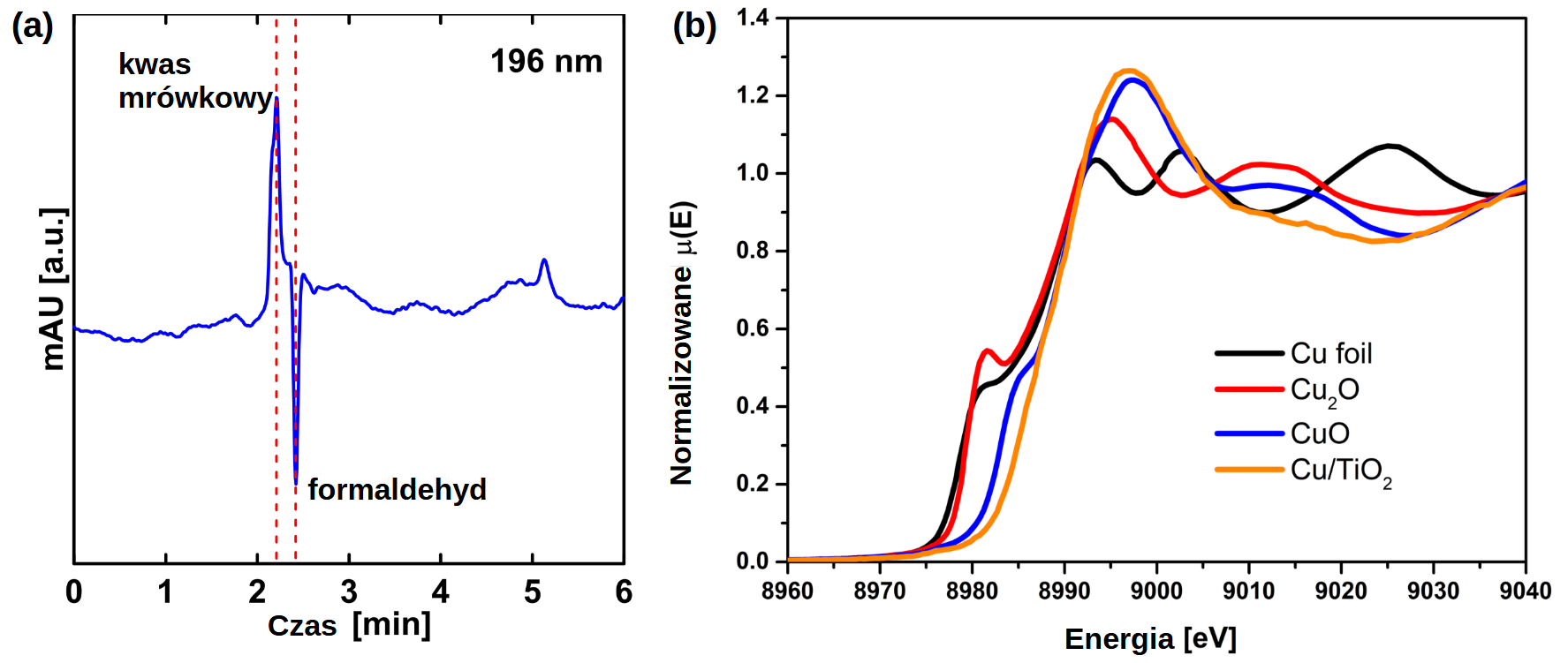
The illustration presents two types of data related to a chemical reaction occurring under light exposure.
Plot (a) shows which products are formed when methanol is irradiated — each peak represents a different substance created during the reaction.
Plot (b) compares how different forms of copper absorb radiation, allowing identification of which form of copper is present in the examined sample.
Image source: doi: 10.1016/j.cej.2023.145687
Most modern electronic devices, such as smartphones and computers, rely on integrated circuits manufactured from single-crystal silicon. This material became the foundation of electronics thanks to a method developed over a hundred years ago by the Polish scientist Jan Czochralski. However, as technology advances, there is a growing need for materials with better electrical, thermal, and mechanical properties. For this purpose, scientists conduct advanced materials research using synchrotron radiation. On beamlines equipped with microscopes, it is possible to analyze the structure and composition of materials on the nanometer scale. This makes it possible to assess their stability and suitability for use in electronics. Such research supports the development of new materials, such as MXenes, which may in the future serve as alternatives to silicon in next-generation integrated circuits. MXenes are also particularly resistant to radiation, so they can be used, for example, in electronics designed for space missions.
Source: SOLARIS, DEMETER beamline.

Image source: licensed image library.
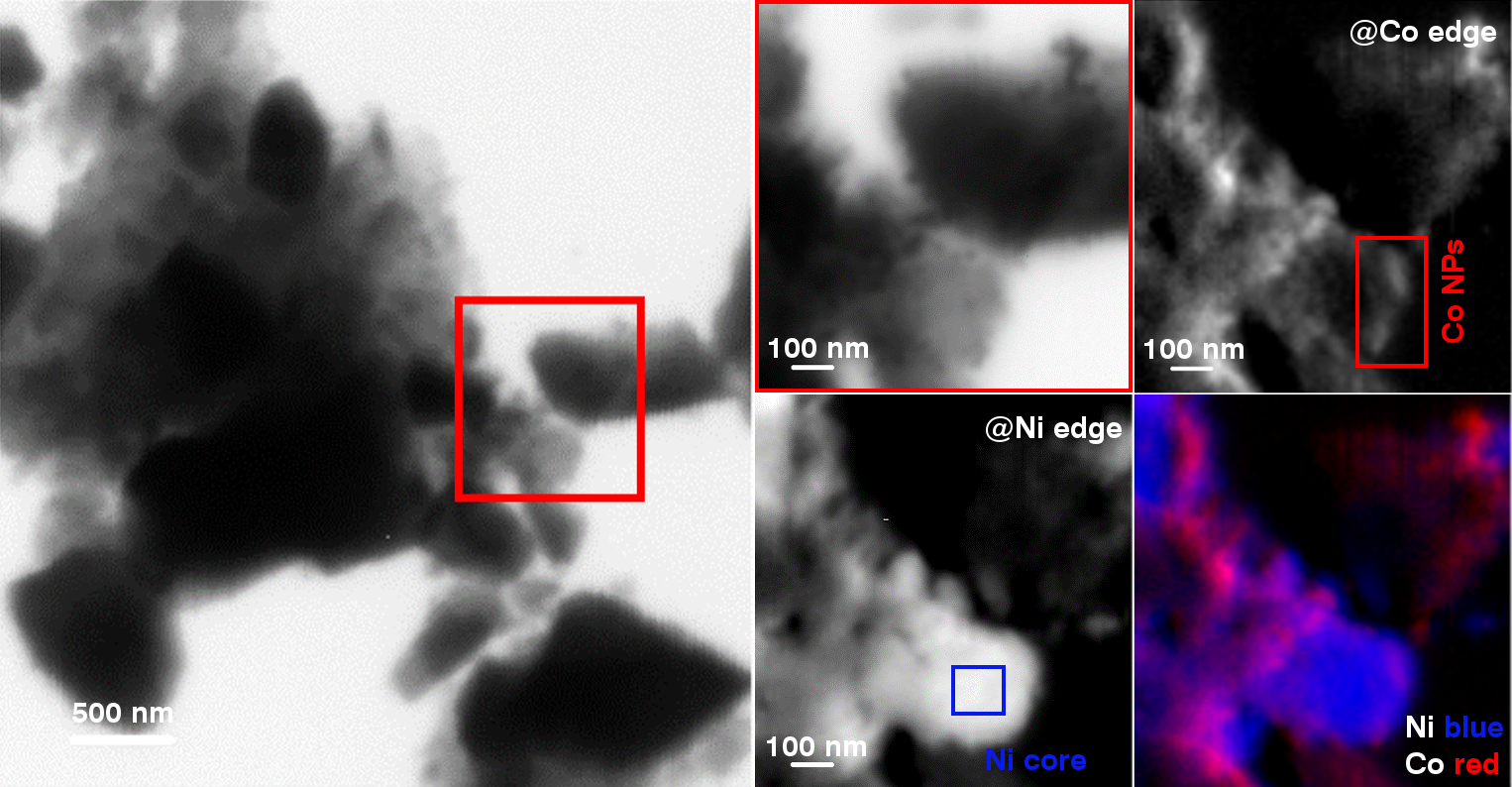
The illustration shows X‑ray microscopy images of a sample containing cobalt. Alongside them are maps indicating where nickel and cobalt atoms are located within the material. The final image combines both maps, making it easy to see how the two elements are distributed across the sample.
Image source: DEMETER, doi.org/10.1016/j.ijhydene.2022.08.057
Ongoing climate change and environmental pollution mean that we need new technologies as well as a better understanding of processes occurring in nature. Water contamination with chemical compounds and dyes is a challenge for ecosystems and human health. Therefore, scientists are seeking methods that can remove harmful substances effectively and safely. Using a synchrotron, researchers studied a new material (NVO and NVO/rGO) that uses the energy of light to break down pollutants present in water. It was shown that the material can remove different types of harmful substances, both industrial pollutants and chemical compounds found in wastewater. Synchrotron radiation made it possible to examine in detail how this material is built and why it works so effectively. As a result, it will be possible to improve it and, in the future, implement a water-purification solution using solar energy.
Source: SOLARIS, ASTRA beamline.

Image source: licensed image library.
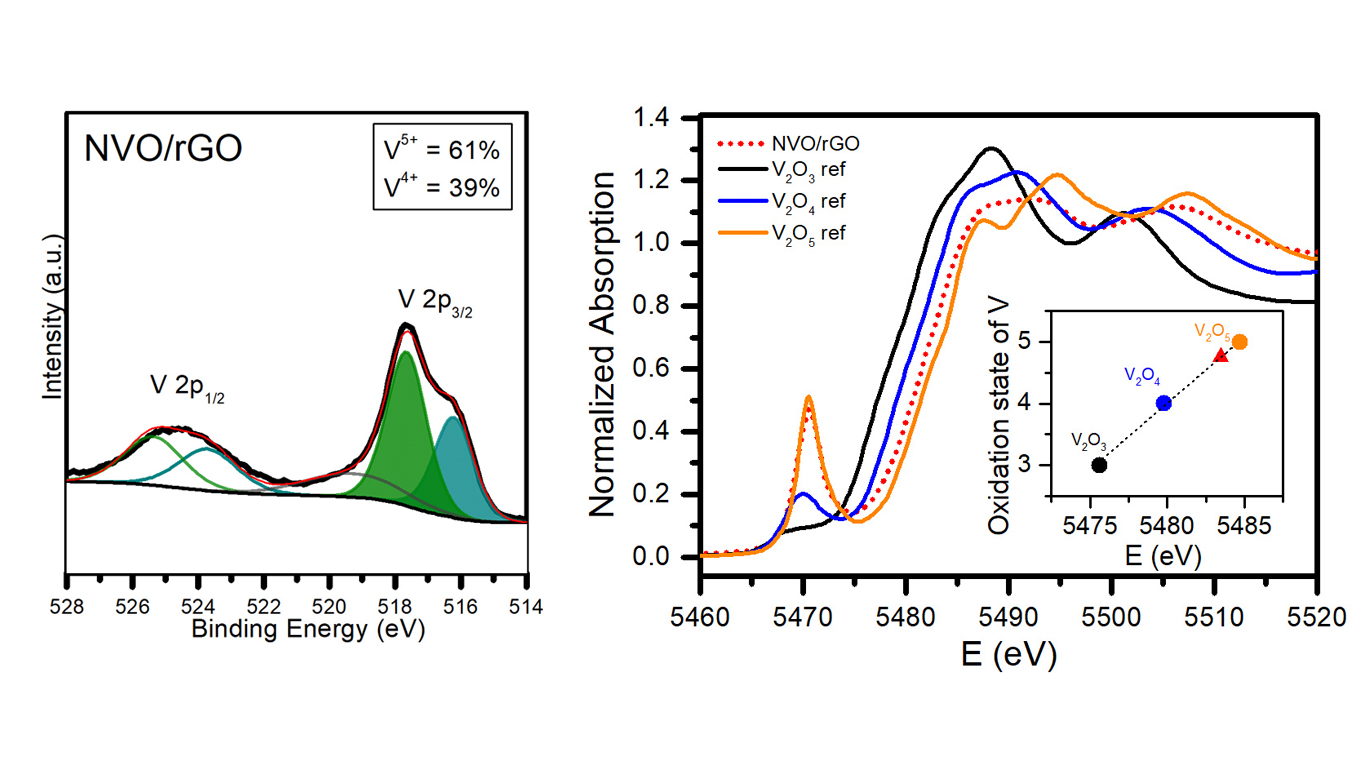
Plot (a) shows how vanadium atoms behave on the surface of the studied material. The spectrum helps reveal their chemical state.
Plot (b) illustrates how vanadium absorbs radiation depending on its oxidation level, making it possible to determine which form of vanadium is present in the sample.
Image source: doi: 10.1038/s41598-023-31130-9
Protecting historical objects and works of art requires research methods that make it possible to understand their composition and structure in detail without the risk of damaging valuable items. Synchrotron radiation enables non-destructive analysis of materials on the micro- and nanoscale, allowing the chemical composition of pigments or primers to be determined and degradation processes occurring over time to be identified. Synchrotron techniques also make it possible to reveal elements invisible to the naked eye, such as overpaintings or sketches hidden beneath layers of paint. Well-known examples include discoveries related to Vincent van Gogh’s paintings, and similar analyses are also carried out at SOLARIS, where studies of samples from museum objects—including cross-sections of paint layers—help identify material composition and assess degradation processes. The results support the development of effective conservation strategies and help make informed decisions, enabling priceless objects to be preserved for future generations.
Source: SOLARIS, CIRI beamline.
Image source: licensed image library.
The deficiency of micronutrients in soil is one of the major challenges of modern agriculture, especially under conditions of advancing climate change and soil degradation. In research conducted by Polish scientists, mechanisms enabling plants to function in an environment with uneven availability of elements necessary for proper growth were investigated. Using synchrotron techniques, it was possible to trace zinc transport in the root system of plants in detail. The studies showed that plants can actively move this micronutrient from soil areas rich in zinc to zones where its concentration is insufficient. This allows them to grow despite partly unfavorable conditions. The results of this research may in the future support the development of more efficient fertilization methods and contribute to more stable and sustainable food production.
Source: SOLARIS, POLYX beamline.
Image source: licensed image library.
The illustration shows a set of roots growing in different types of soil - both uniform and varied, under increased zinc levels. The colours on the image indicate the intensity of the zinc‑related signal, with the lowest values corresponding to background levels.
Image source: doi: 10.1186/s12870-025-07391-z
Modern technologies increasingly rely on materials with properties that cannot be achieved on the macro scale. Gold nanoparticles are an example—they can have completely different characteristics than the same material in its “ordinary” form. As a result, they are used in modern electronics, sensors, and medical technologies. To design such materials intentionally, scientists must understand exactly how electrons behave within them. For this purpose, synchrotron research is used, making it possible to describe in detail the distribution of electron density and electron velocities within the material structure, which explains its properties. The studies showed that when excited by light, gold nanoparticles can generate very high-energy electrons that can be used, for example, in photovoltaics, photocatalysis, and cancer therapy. Such research helps create new materials with designed parameters that can be used in the technologies of the future.
Source: SOLARIS, PHELIX beamline.
Image source: licensed image library.
The chart compares two measurements that show how electrons behave in the material right after it is excited by light. The zero point on the energy scale marks the level where the electrons are still bound to the material. The green optical pulse is illustrated as a smooth, bell‑shaped band representing the energy of the light used to excite the sample.
Image source: DOI: 10.1038/s41467-025-57657-1
The origin of water on Earth remains one of the most important questions in modern science, because water is a prerequisite for life. One hypothesis suggests that it may have been delivered to Earth by comets, but existing measurements are not sufficient to resolve this issue. In response, the HYADES mission is being developed, with the goal of studying comets and comparing their composition with the water found on Earth. A key stage of preparation is the testing of measuring instruments using synchrotron radiation. Similar research also supports the development of instruments designed to observe the Sun from space (the BRAXIS mission). Thanks to synchrotron use, it is possible to verify whether such devices work correctly and whether they are ready to operate in the harsh conditions of outer space. Synchrotron research therefore helps create technologies that enable exploration of the Solar System and a better understanding of our planet’s history.
Source: SOLARIS, URANOS beamline, ASTRA beamline.
Image source: https://www.eso.org/public/images/eso1820a/
Visualization of a satellite from the HYADES space mission.
Image source: HYADES – Hydrogen and Deuterium Survey.
The safety of cosmetics and personal-care products requires strict control of their composition, especially at the raw-material selection stage. One potential threat is trace amounts of heavy metals, including lead or cadmium, which may appear in mineral-based ingredients or in mixtures of raw materials. Using synchrotron radiation facilities and advanced analytical techniques, scientists are able to detect such contaminants even at extremely low concentrations. The results of these studies support quality control processes and reduce the risk of consumer exposure to undesirable substances. Research conducted at synchrotron facilities enables the responsible production of safe cosmetic products and has a tangible impact on the safety of their everyday use.
Source: SOLARIS, POLYX beamline.
Image source: licensed image library.
Samples of cosmetic raw materials in tablet form just before XRF analysis on the POLYX beamline.
Image source: photo by Paweł Wróbel